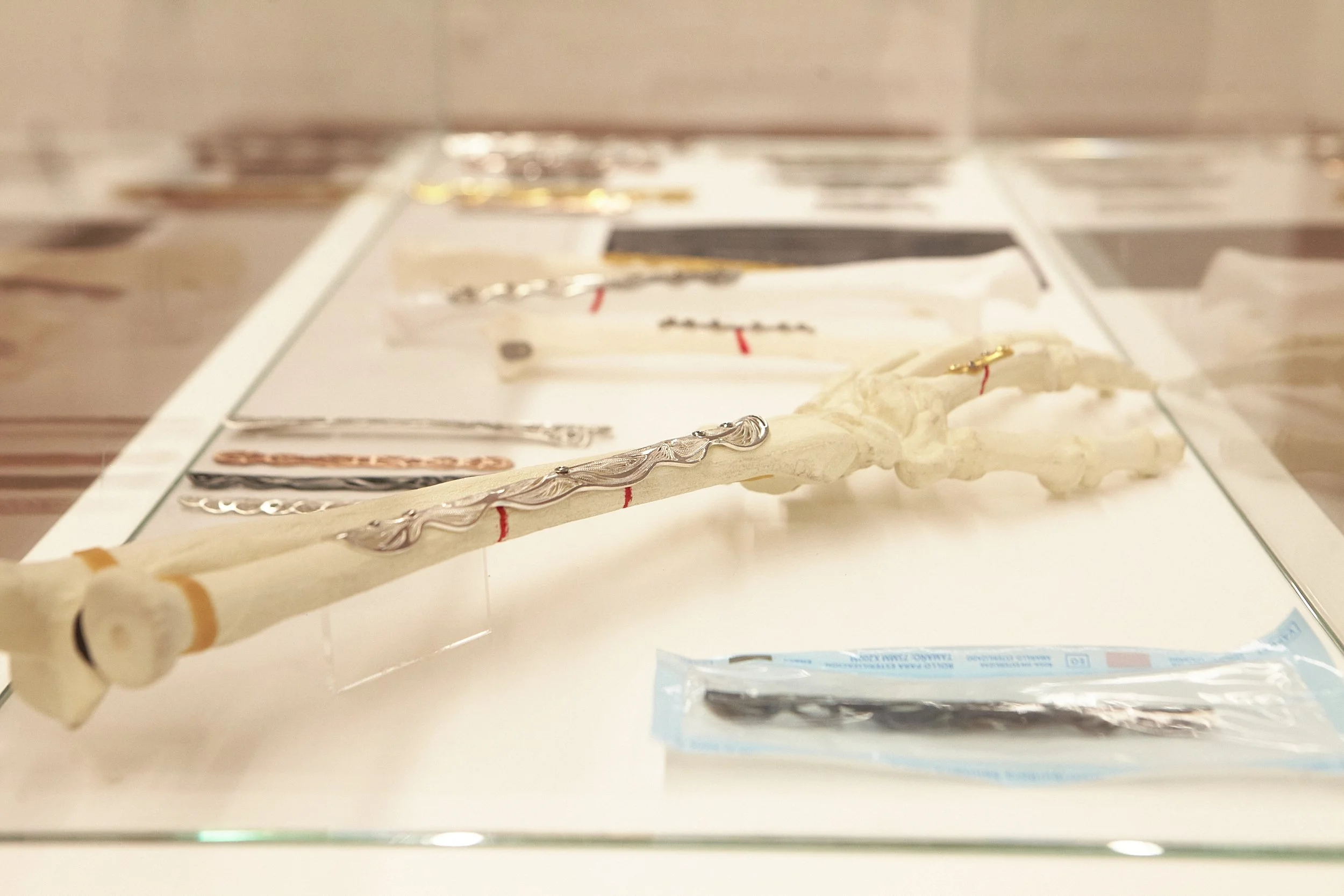
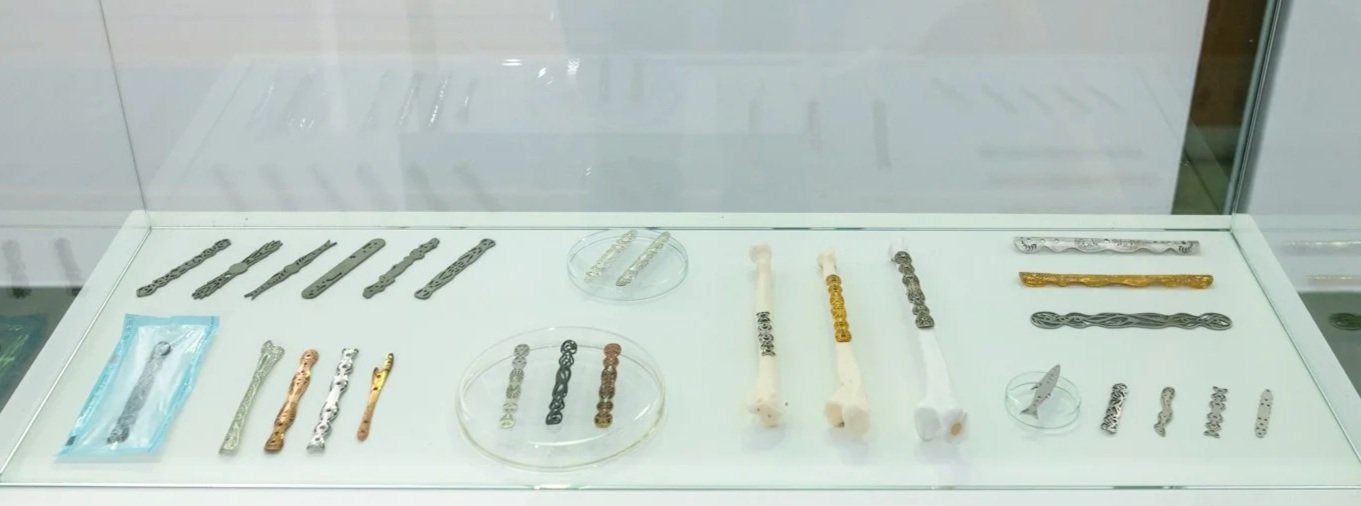
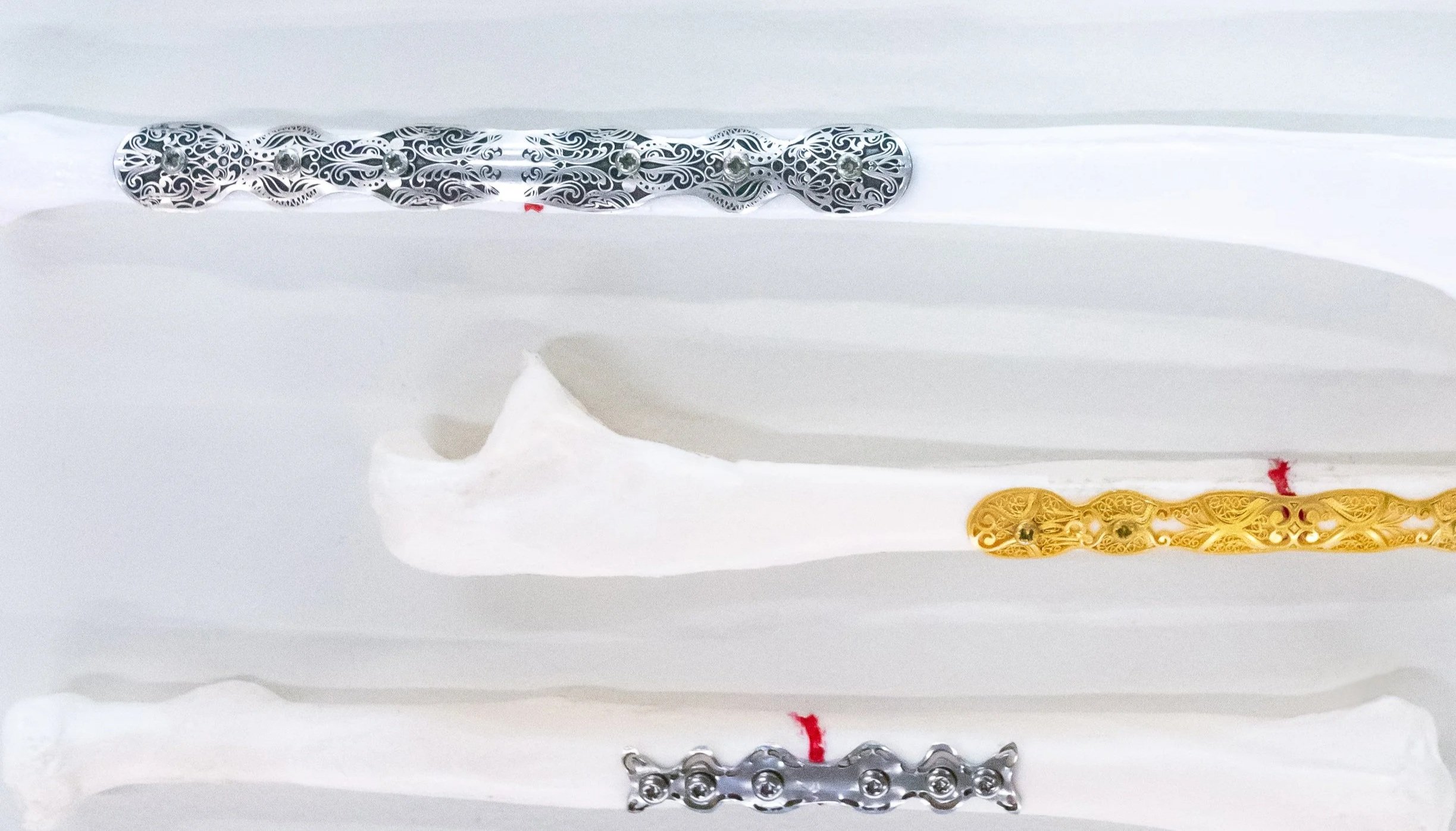
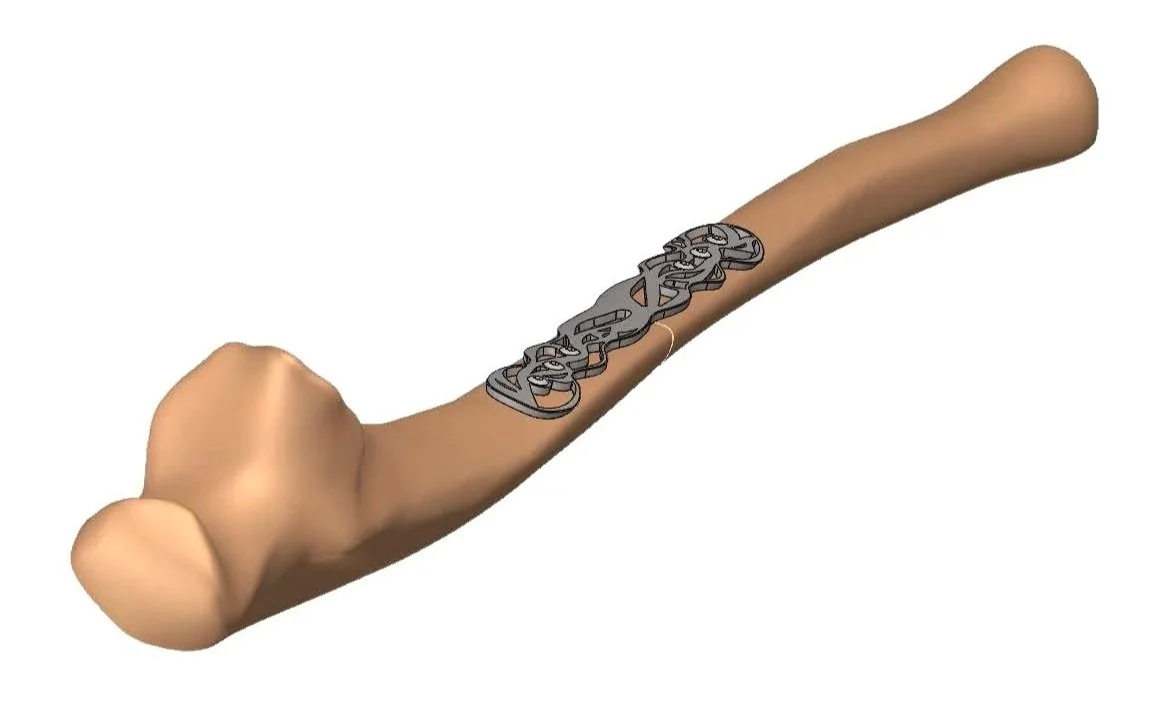
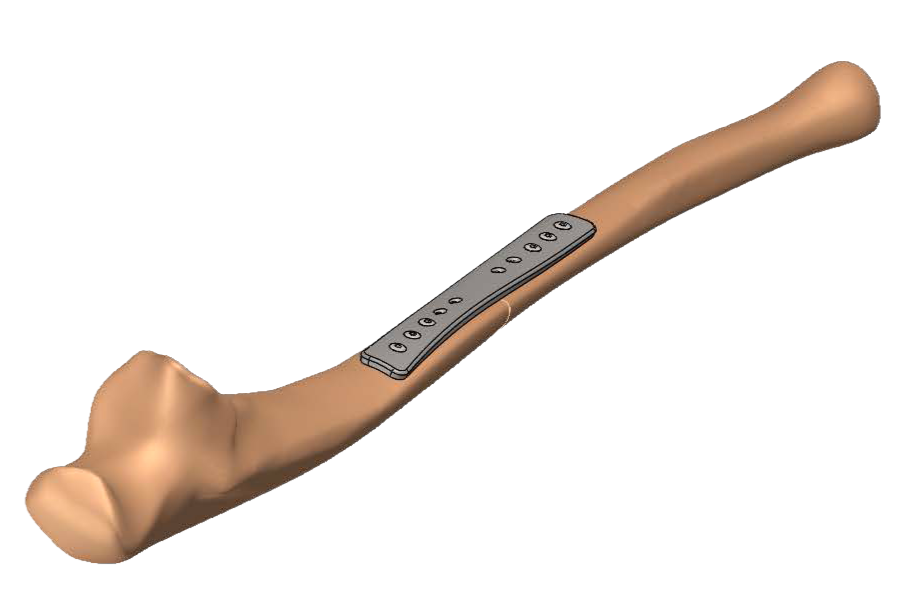
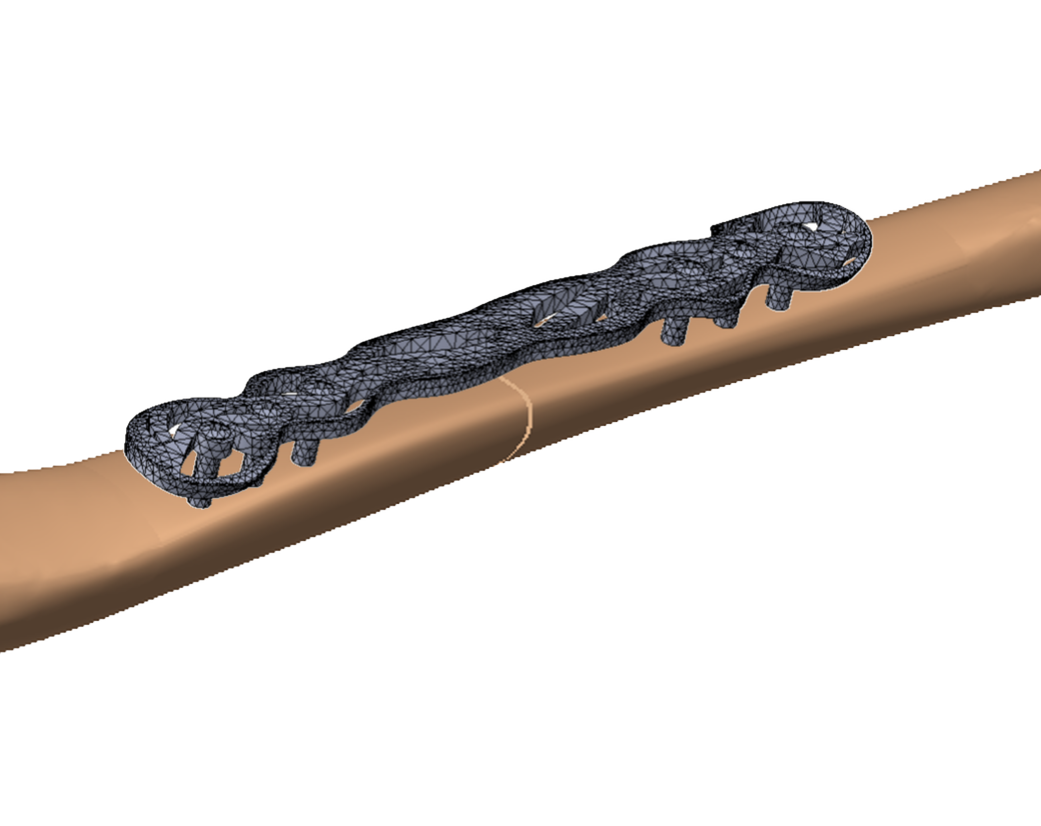
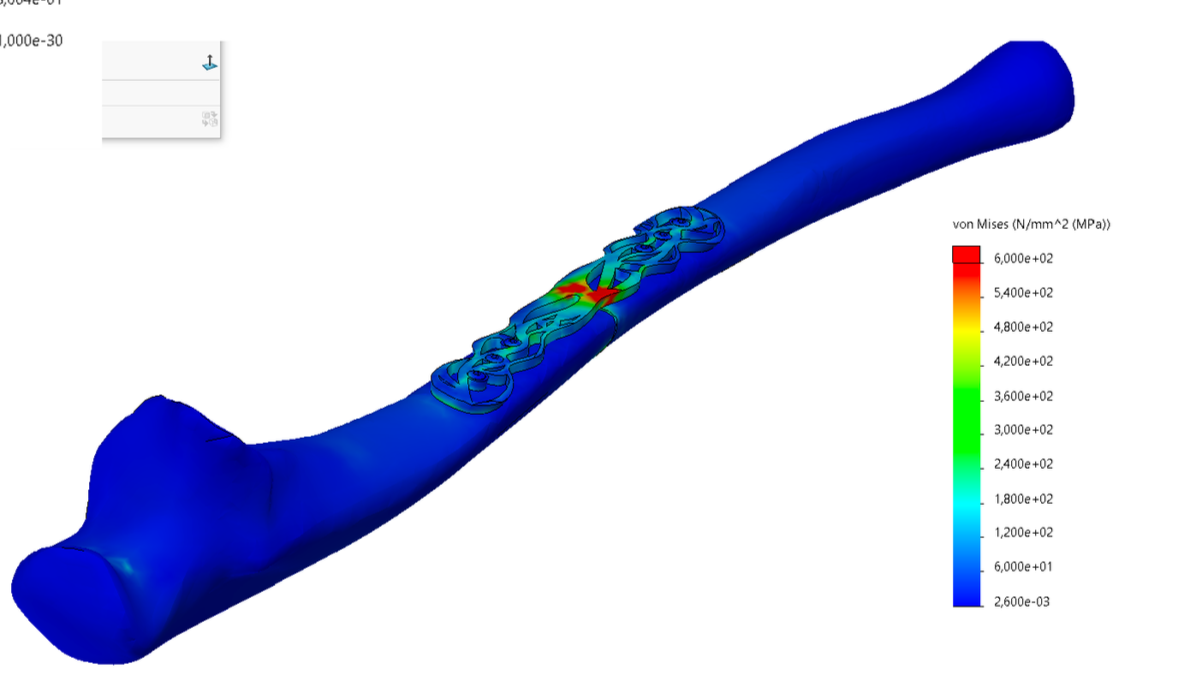
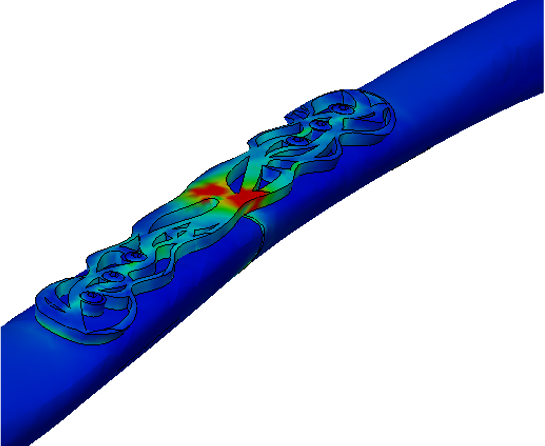
Preliminary results confirm the clinical potential of Biofiligree plates for forearm reconstruction, highlighting their anatomical adaptability and reduced stiffness compared to commercial alternatives. While the design is well-suited for low-load fractures, further optimisation is being implemented at the fracture site to ensure the maximum stability required for the ulna and radius—bones subject to complex torsional and axial stresses.
A key advantage of the Biofiligree concept in radius and ulna fixations is the minimised bone-to-plate contact area. This feature enhances osteoconduction across the cortical surface and facilitates superior biological integration, addressing the critical need for preserved vascularisation in the forearm’s delicate periosteal environment.